
How to Avoid Utility Strikes on Texas Job Sites: What Every Contractor Should Know
Underground utility strikes are one of the most dangerous and costly events that can happen on any job site, and in Texas, where construction activity runs year-round and underground infrastructure continues to expand alongside rapid population growth, the stakes are higher than ever. A single strike can injure or kill workers, trigger project shutdowns, expose contractors to significant legal liability, and cause service disruptions affecting entire neighborhoods. The question is not whether the risk exists. It is whether your excavation partner has the training, equipment, and protocols to manage it correctly every single time.
At 4 Warriors Hydro Excavating, safe digging is not a feature we offer. It is the foundation of everything we do. Serving contractors, municipalities, and project owners across Texas, our team brings specialized hydro excavation expertise, a proven non-destructive methodology, and a safety-first culture built from the ground up. When the ground you are digging in is full of gas lines, fiber, water mains, and electrical conduit, the crew you trust to work in it matters enormously.
The Scale of the Utility Strike Problem in Texas and Beyond
Before understanding the solution, it helps to understand just how serious the problem is. The United States experiences between 400,000 and 800,000 utility strikes annually, costing an estimated $30 billion each year. The average direct cost per strike runs around $4,000, but for every dollar in direct damage, indirect costs can multiply that figure dramatically when downtime, rescheduling, emergency repairs, and liability are all factored in.
Failure to notify 811 before digging accounts for nearly 25 percent of all utility damages nationally, making it the single largest root cause. Excavators failing to maintain proper clearance from marked lines accounts for another 16 percent. These are not random accidents. They are predictable failures with predictable consequences, which means they are also preventable.
In Texas specifically, the challenge is compounded by the pace of development. Rapidly growing metros like Dallas-Fort Worth, Houston, San Antonio, and Austin are layering new infrastructure over aging underground systems, meaning the density and complexity of what lies beneath a job site is constantly increasing. For contractors working in this environment, a non-destructive excavation approach is not a premium option. It is a practical necessity.
How Hydro Excavation Eliminates the Risk That Mechanical Digging Creates
Traditional mechanical excavation uses physical force to move earth. Backhoes, trackhoes, and trenchers are efficient on open ground, but they offer no precision near buried infrastructure and no ability to stop before contact is made. By the time the bucket reaches a utility line, the strike has already happened.
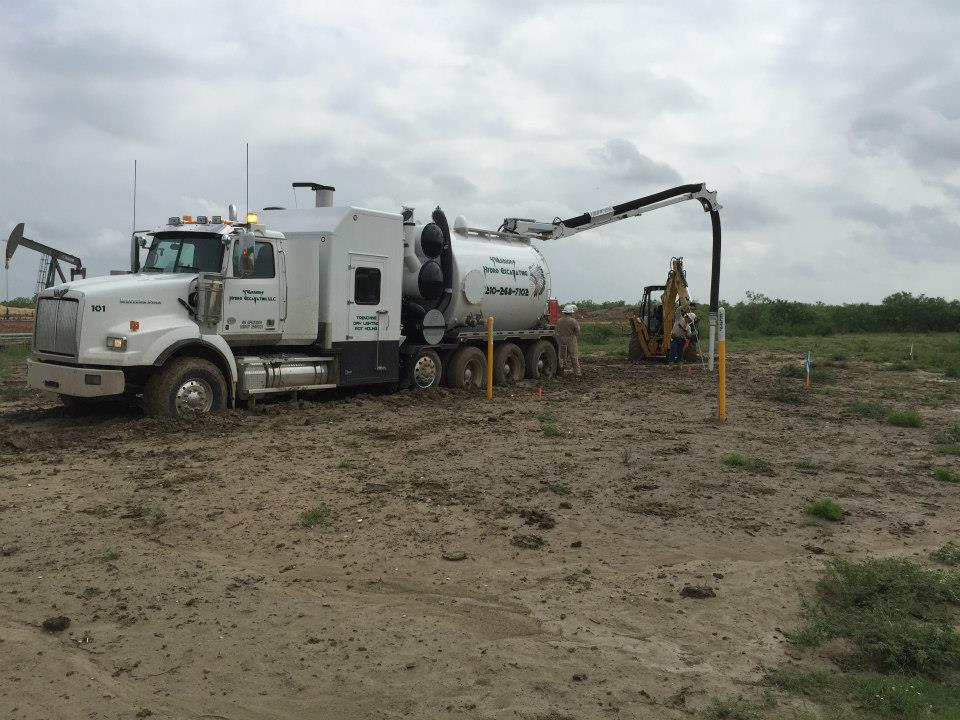
Hydro excavation eliminates these risks by using pressurized water and a powerful vacuum system to safely expose underground utilities without mechanical contact. The pressurized water breaks up the soil while the vacuum simultaneously removes the slurry into a debris tank on the truck. The result is precise, controlled excavation that can expose utilities to exact depths and locations without any risk of direct impact.
This approach is particularly effective for potholing, the practice of exposing a small area around a known utility location to visually verify its exact depth and position before full excavation begins. Even after utilities have been marked by a locate service, those markings confirm general location but cannot guarantee precision at depth. Hydro excavation makes that verification fast, safe, and non-destructive, giving your crew confirmed eyes on what is in the ground before any further work begins.
4 Warriors’ Safety Protocols: What Happens Before, During, and After Every Dig
Safe excavation at 4 Warriors is a process, not a single precaution. Here is how that process works on a typical job site across Texas.
Before the first drop of water hits the ground, our team verifies that 811 has been contacted and that all public utility locate tickets are active and current. We also assess the site for private utilities, which 811 does not cover, and coordinate with project owners and engineers to identify any infrastructure not captured in the public locate request.
During excavation, our operators work within defined tolerance zones, the area immediately adjacent to a marked utility line where only soft digging methods are permitted. Across Texas, that zone typically extends 18 to 30 inches on either side of a marked line. Our crews treat every tolerance zone as a no-mechanical-equipment boundary without exception. Hydro excavation is the only method used within those boundaries.
After utilities are visually confirmed, we document locations, communicate findings to the site team, and proceed with the full scope of excavation knowing exactly what is in the ground and where. That documentation also protects contractors in the event of any post-project dispute about site conditions.
Practical Tips for Texas Contractors Working Near Underground Utilities
Whether you are partnering with 4 Warriors on a job or managing your own crew’s approach to utility safety, these practices reduce strike risk on every project.
Call 811 early, not the morning of. Texas requires notification at least two business days before digging begins. Calling early gives utility companies adequate time to locate and mark their infrastructure accurately, and gives your project team time to adjust plans if markings reveal conflicts with the planned excavation path.
Never assume a marked line is the only line. Public locate tickets cover utility company-owned infrastructure, but private utilities, including lines running from the meter to structures on private property, are not marked through 811. On any site with existing development, treat unmarked ground with the same caution as marked ground until a private locate has been completed.
Use hydro excavation to verify before you commit equipment. Potholing a utility corridor with a hydrovac truck before bringing in mechanical equipment takes a fraction of the time it takes to manage a strike event. It is one of the most reliable investments in schedule protection a Texas contractor can make.
Document everything. Site conditions, locate tickets, visual confirmations, and crew communications should all be recorded. In Texas’s active construction market, thorough documentation is both a safety tool and a legal one.
Ready to Dig Safer on Your Next Texas Project?
Utility strikes are preventable. The right partner, the right equipment, and the right protocols make the difference between a project that runs on schedule and one that does not.
Contact 4 Warriors Hydro Excavating today to discuss your upcoming project. Our team serves contractors and municipalities across Texas with the non-destructive hydro excavation expertise, safety protocols, and field experience to keep your job site moving and your crew protected. Let’s make sure the ground you break stays safe from the first dig to the last.