What Can Hydro Excavation Be Used for Beyond Utility Locating?
Hydro excavation can be used for much more than locating underground utilities. Its precision makes it useful for slot trenching, debris removal, pole and sign installation, pipeline work, sewer and drainage projects, exposing infrastructure for repairs, and excavation in congested or hard-to-reach areas. These applications make hydro excavation a versatile solution for construction, utility, municipal, and industrial projects.
At 4 Warriors Hydro Excavation, we know that every excavation project presents different challenges. Some jobs require carefully exposing a buried utility, while others call for narrow trenches, precise holes, or access around existing infrastructure. Hydro excavation provides the flexibility to handle many of these tasks while limiting unnecessary soil disturbance. By combining pressurized water with powerful vacuum equipment, our crews can remove soil in a controlled manner and help contractors gain access to exactly where work needs to happen. That versatility can make hydro excavation a valuable resource throughout multiple stages of a project, not just during the initial utility locating process.
Versatile Hydro Excavation Applications for Construction and Utility Projects
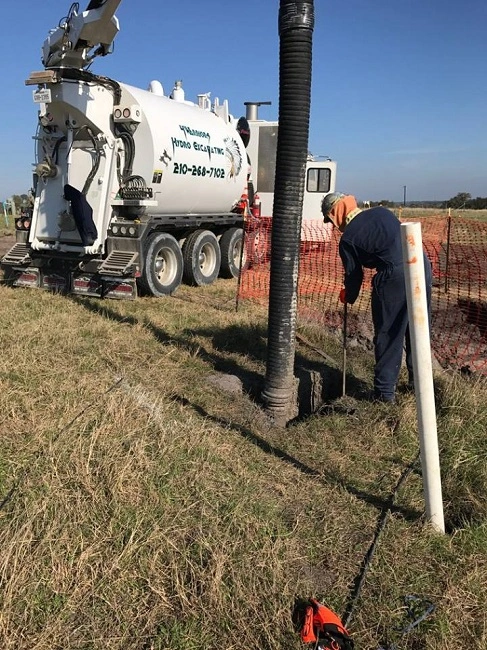
The versatility of hydro excavation comes from its ability to remove soil precisely without relying solely on mechanical digging equipment at the excavation point. Crews can target specific areas while helping reduce the potential for accidental contact with underground infrastructure.
OSHA’s excavation standard requires contractors to determine the estimated location of underground installations before excavation begins. When excavation approaches those installations, their exact location must be determined using safe and acceptable means. OSHA’s current compliance directive notes that hydro-vacuum excavation equipment may constitute a safe and acceptable means when used with appropriate caution.
That precision opens the door to applications well beyond basic utility locating.
What Types of Projects Can Hydro Excavation Handle?
Hydro excavation can support many projects that require controlled soil removal, accuracy, or reduced disturbance around existing infrastructure.
Common applications include:
- Utility daylighting and potholing: Exposing utilities to verify their exact horizontal and vertical location.
- Slot trenching: Creating narrow trenches for conduit, cables, piping, and other underground installations.
- Pole and sign installation: Excavating targeted holes for poles, signs, posts, and similar structures.
- Pipeline work: Exposing sections of existing pipeline for inspection, maintenance, repair, or installation work.
- Sewer and drainage projects: Providing controlled access to buried lines and components.
- Debris and soil removal: Vacuuming loose material from areas where conventional excavation may be impractical.
- Repair and maintenance access: Carefully exposing existing underground infrastructure so crews can reach the component requiring service.
The same equipment can therefore support several phases of a construction or utility project, giving contractors a flexible excavation option when precision is important.
Why Is Hydro Excavation Useful in Tight or Congested Areas?
Hydro excavation can be particularly valuable when large mechanical excavation equipment cannot safely or practically operate directly over the excavation point.
Construction sites are not always wide-open spaces. Underground infrastructure may be concentrated beneath streets, commercial properties, industrial facilities, or developed sites where multiple utilities occupy a relatively small area.
Hydro excavation allows crews to make targeted excavations instead of unnecessarily disturbing a larger section of ground. Depending on site conditions and equipment configuration, the excavation unit can also be positioned away from the exact digging location while hoses provide access to the work area.
This capability may be useful around:
- Existing buildings and foundations
- Utility corridors
- Roadways and developed properties
- Industrial equipment
- Landscaping and improved surfaces
- Areas containing multiple buried utilities
Less unnecessary excavation can also mean less material to manage and potentially less restoration after the underground work is completed.
How Does Hydro Excavation Support Utility Repairs and Maintenance?
Hydro excavation allows crews to carefully expose underground infrastructure before repairs or maintenance begin, giving technicians clearer access to the affected component.
For example, a crew responding to a damaged water line may need to uncover the pipe without causing additional damage to nearby utilities. Hydro excavation can remove soil around the target area in a controlled manner, allowing repair crews to see the infrastructure and surrounding conditions more clearly.
This matters because excavation near buried infrastructure requires careful planning. OSHA states that underground installations must be located before excavation begins and protected, supported, or removed as necessary while an excavation remains open.
Hydro excavation does not replace utility locating, proper planning, protective systems, or other required safety measures. Instead, it can become part of a broader excavation strategy designed to provide precise access while managing risk.
Can Hydro Excavation Be Used for Trenching and Installation Work?
Yes. Slot trenching is one of the most practical applications of hydro excavation when a project requires a relatively narrow excavation.
Instead of opening a wide area with conventional equipment, hydro excavation can remove soil along a targeted path. Depending on project requirements and site conditions, these trenches may provide space for installing conduit, utility lines, cables, piping, or other underground components.
Hydro excavation can also be useful when installing poles, signs, posts, and similar structures. Crews can create targeted excavations while minimizing disturbance to surrounding soil and improvements.
The result is a method that can provide contractors with greater control over the dimensions and location of an excavation.
When Should Contractors Consider Hydro Excavation?
Contractors should consider hydro excavation when precision, underground utility protection, limited site disturbance, or difficult access are important project concerns.
A few questions can help determine whether it makes sense for a particular job:
- Are known or suspected utilities located near the excavation?
- Does the crew need to verify the exact depth or position of underground infrastructure?
- Is the excavation located in a congested or difficult-to-access area?
- Would a smaller, more targeted excavation reduce restoration work?
- Does the project require precise trenching, potholing, or holes?
- Will existing underground infrastructure need to be exposed for inspection or repair?
Hydro excavation is not a replacement for every form of traditional excavation. Large-scale earthmoving, for example, may be better suited to conventional equipment. Its versatility is most apparent on projects where accuracy and controlled soil removal matter.
OSHA also emphasizes that excavation work involves hazards beyond underground utilities, including cave-ins, water accumulation, and hazardous atmospheres. Proper site evaluation and applicable protective measures remain essential regardless of the excavation method being used.
Hydro Excavation FAQs
Is hydro excavation only used to locate utilities?
No. Utility daylighting is a common application, but hydro excavation can also be used for slot trenching, pole and sign holes, pipeline work, sewer and drainage projects, repair access, debris removal, and other precise excavation tasks.
Can hydro excavation be used near existing utilities?
Hydro excavation is commonly used to carefully expose underground infrastructure where precision is important. OSHA’s current excavation compliance directive notes that hydro-vacuum excavation equipment may constitute a safe and acceptable means of determining utility locations when used with appropriate caution.
Does hydro excavation replace calling 811?
No. Hydro excavation does not replace utility notification and locating requirements. OSHA advises contacting 811 or the applicable state 811 center before digging and ensuring underground lines are marked before excavation begins.
Is hydro excavation appropriate for every project?
Not necessarily. Traditional excavation may be more practical for bulk earthmoving and other large-volume digging. Hydro excavation is particularly useful when a project requires precision, controlled excavation, utility exposure, or work around sensitive infrastructure.
Discover What Hydro Excavation Can Do for Your Next Project
Hydro excavation is far more than a utility locating method. From potholing and slot trenching to pipeline maintenance, installation work, and difficult-access excavation, its versatility can help construction and utility crews solve a wide range of underground challenges with greater control.
Have a project that requires precise excavation? Contact 4 Warriors Hydro Excavation to discuss how hydro excavation can support your next project.