
What Is Non-Destructive Digging and How Does It Work?
Non-destructive digging is an excavation method that uses pressurized water or air to loosen soil and a powerful vacuum to remove it without relying on aggressive mechanical digging. Hydro excavation is a common form of non-destructive digging. It allows crews to expose buried utilities precisely while reducing the risk of damaging pipes, cables, conduits, and other underground infrastructure.
At 4 Warriors Hydro Excavation, precision matters because what is underground can be just as important as the work happening above it. Our team uses professional hydro excavation equipment to help contractors, utility companies, municipalities, and other customers uncover underground infrastructure while minimizing unnecessary ground disturbance. Instead of relying solely on buckets, teeth, or other mechanical digging equipment around sensitive utilities, hydro excavation provides a controlled way to remove soil. This approach can improve accuracy, reduce risk, and help crews make informed decisions before construction or repairs continue. When a project requires careful digging around buried infrastructure, non-destructive excavation can provide the visibility crews need while helping protect the assets already in place.
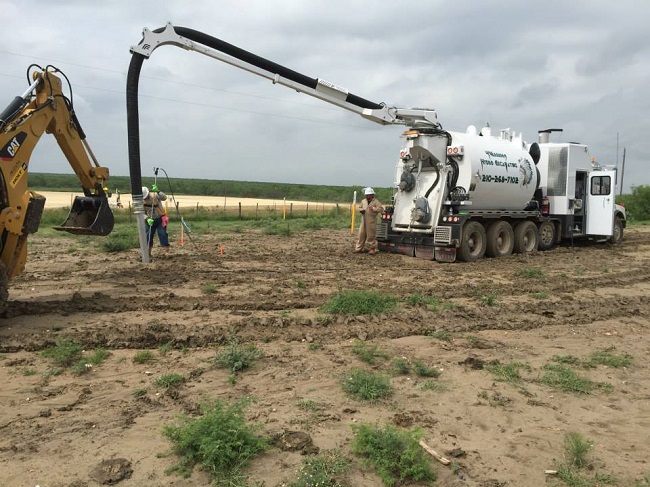
How Non-Destructive Excavation Protects Underground Utilities
The primary advantage of non-destructive excavation is control. Rather than mechanically cutting or scooping through the soil, vacuum excavation uses water or air and suction to remove material from a targeted area.
Vacuum excavation is widely recognized as a non-destructive alternative to conventional mechanical excavation for exposing underground infrastructure. Industry sources describe both pressurized water and compressed air systems as methods for loosening soil before an industrial vacuum removes the excavated material.
How Does Non-Destructive Digging Work?
Non-destructive digging works by breaking up soil in a controlled manner and immediately vacuuming the loosened material into a debris tank.
With hydro excavation, the basic process involves:
- Identifying the excavation area: Crews review utility markings and determine where precise excavation is needed.
- Loosening the soil: Pressurized water is directed into the targeted area to break apart the soil.
- Removing the material: A high-powered vacuum pulls the water, soil, and debris from the excavation.
- Collecting the slurry: Excavated material is transferred through the vacuum hose into a debris tank.
- Exposing the target area: Crews continue carefully until the utility or required excavation depth is reached.
Because the process does not depend on a mechanical bucket cutting through the excavation area, operators can work with greater control around sensitive underground infrastructure.
Why Is Non-Destructive Digging Safer Around Utilities?
Non-destructive digging reduces direct mechanical contact with buried utilities, which can lower the risk of accidental strikes.
That benefit is important because underground utility damage remains a significant challenge for construction and excavation projects. The Common Ground Alliance’s 2024 DIRT Report recorded 196,977 unique damage events in its dataset, with telecommunications and natural gas facilities accounting for the largest categories of damaged infrastructure.
The consequences of striking an underground utility can include:
- Worker and public safety hazards
- Gas, water, or sewer leaks
- Electrical hazards
- Telecommunications or fiber outages
- Emergency repairs
- Construction delays
- Additional labor and restoration costs
Non-destructive digging does not eliminate the need for proper utility locating, jobsite planning, or safe digging procedures. Instead, it provides another layer of protection when crews need to physically expose and verify what is underground.
What Is Non-Destructive Digging Used For?
Non-destructive digging is commonly used when crews need precise access to underground infrastructure or when mechanical excavation could create unnecessary risk.
Common hydro excavation applications include:
- Potholing: Creating small test holes to determine the location and depth of buried utilities.
- Daylighting: Exposing a portion of an underground utility so crews can visually verify its position.
- Slot trenching: Creating narrow trenches for utilities, cables, piping, or other installations.
- Utility repairs: Carefully exposing damaged or aging infrastructure for inspection and repair.
- Pipeline work: Providing controlled access around pipelines and related infrastructure.
- Pole and sign installation: Excavating precise holes where underground utilities may be nearby.
- Tight-access excavation: Performing digging work in areas where conventional heavy equipment may have limited access.
Vacuum excavation is particularly useful in congested areas and around existing utilities because it provides precise, controlled access while limiting surface disturbance.
How Is Non-Destructive Digging Different From Traditional Excavation?
The main difference is how the soil is removed. Traditional mechanical excavation typically uses physical digging tools, while non-destructive methods use water or air combined with vacuum suction.
A backhoe or excavator is highly effective for moving large amounts of earth, especially when crews are working in open areas without sensitive infrastructure nearby. However, mechanical equipment can be less suitable when workers need to know exactly what is beneath the ground.
Non-destructive hydro excavation offers several advantages in those situations:
- More precise soil removal
- Reduced mechanical contact with buried infrastructure
- Smaller excavation areas when only targeted access is required
- Less unnecessary ground disturbance
- Easier exposure of utilities for visual verification
- Access to some locations that are difficult for large equipment
Traditional excavation still has an important role in construction. Non-destructive digging is not intended to replace every backhoe or excavator. Instead, it gives project teams a more precise option when the consequences of striking an underground asset are high.
Why Can Non-Destructive Digging Save Time and Money?
Non-destructive digging can help control project costs by reducing unnecessary excavation, restoration, and the risk of expensive utility damage.
The financial impact of excavation damage extends beyond repairing a broken line. A utility strike can stop work, disrupt service, require emergency response, affect other contractors, and push a project behind schedule.
Precise excavation can also mean crews disturb only the area necessary to complete the work. Smaller excavation areas may require less backfill, surface restoration, and cleanup than a larger mechanical excavation.
For project managers, the practical question is not simply, “Which digging method costs less per hour?” The better question is, “Which method provides the lowest total project risk and cost?”
When buried utilities are involved, precision can be valuable.
Frequently Asked Questions About Non-Destructive Digging
Is hydro excavation the same as non-destructive digging?
Hydro excavation is a type of non-destructive digging. It uses pressurized water to loosen soil and a vacuum system to remove the resulting slurry without relying primarily on mechanical digging tools.
Can non-destructive digging locate underground utilities?
Non-destructive digging can physically expose a utility so its exact position and depth can be visually verified. It complements utility locating and marking rather than replacing those steps.
What is the difference between hydro excavation and air excavation?
Hydro excavation uses pressurized water to loosen soil, while air excavation uses compressed air. Both can be combined with vacuum extraction and are considered forms of vacuum or non-destructive excavation.
When should non-destructive digging be used?
Non-destructive digging is especially useful when excavating around known or suspected underground utilities, completing potholing or daylighting, working in congested areas, or performing a project where precise soil removal is more important than bulk earthmoving.
Dig Smarter With 4 Warriors Hydro Excavation
Non-destructive digging gives contractors and project owners a precise way to uncover what is below the surface while reducing the risks associated with aggressive mechanical excavation. By using pressurized water and powerful vacuum equipment, hydro excavation can help protect underground infrastructure, minimize unnecessary disturbance, and keep projects moving efficiently.
Need a safer, more precise way to dig? Contact 4 Warriors Hydro Excavation today to discuss your project and learn how professional hydro excavation can help you safely access what is underground.